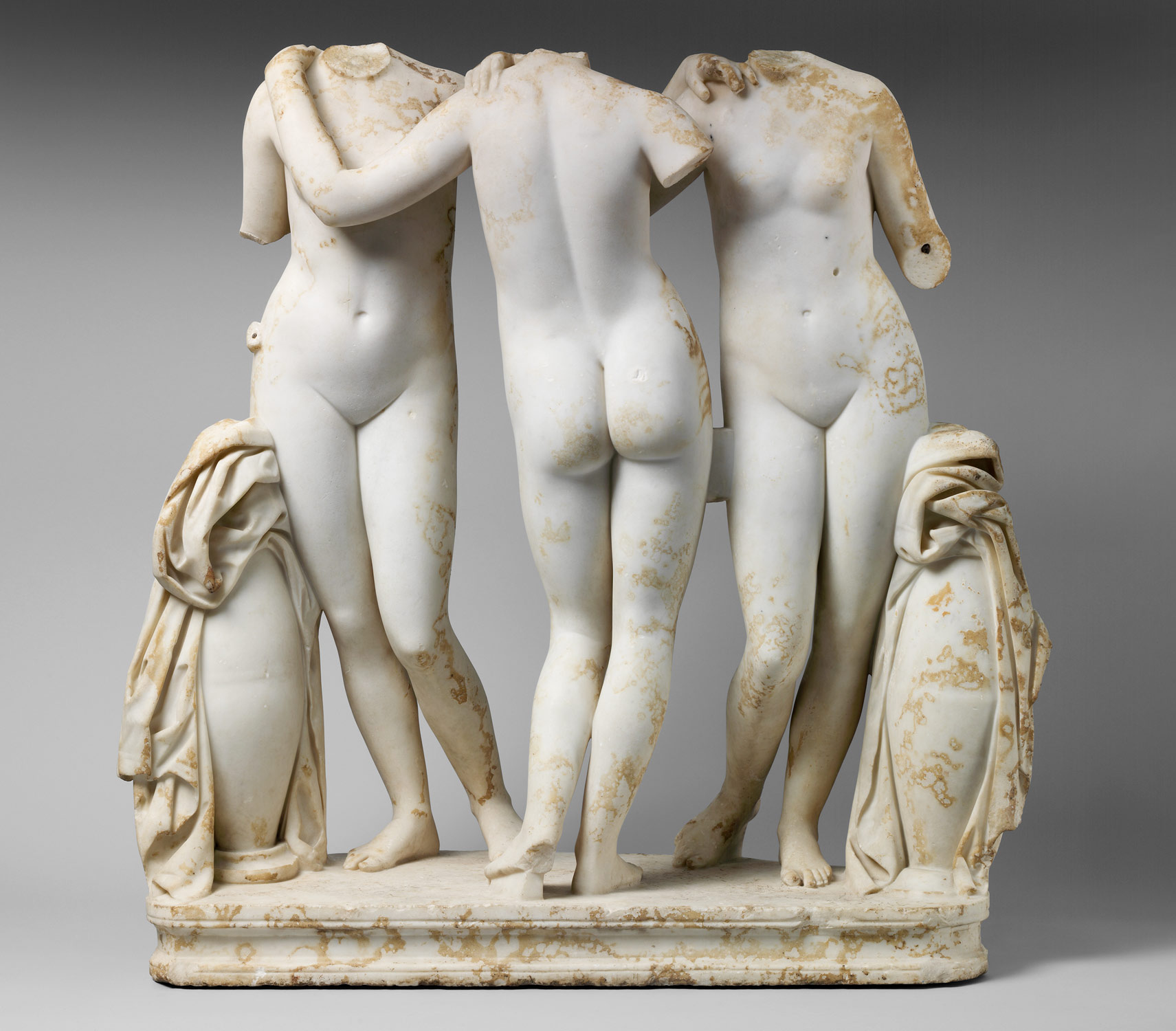
Statue of the Three Graces
Dublin Core
Title
Statue of the Three Graces
Subject
Charities
Description
The Three Graces were said to be the daughters of Zeus, in Greek mythology. Engravings on many statue-esque pieces of artwork tell us that they are Thaleia, who represents youthfulness and beauty, Euphrosyne, who represents laughter, fun, and happiness, and Aglaia, who represents elegance and grace. Not only does the sculpture relate to other works of art in which the women are sculpted in a divine nature as goddesses, but it also tells us a lot about people in this society’s perceptions. For example, the Three Graces – Thaleia (the rightmost figure) represents the image of beauty, but the image of beauty varies from culture to culture in different time periods. Today’s ideation of what is beautiful looks a bit different than what was chiseled into the marble back then.
Creator
Rome
Date
2nd century A.D.
Format
Marble
Type
Sculpture
Collection
Citation
Rome, “Statue of the Three Graces,” World History 1 Online, Spring 2019, accessed October 17, 2026, https://jacknorton.org/1101-online-sp19/items/show/57.