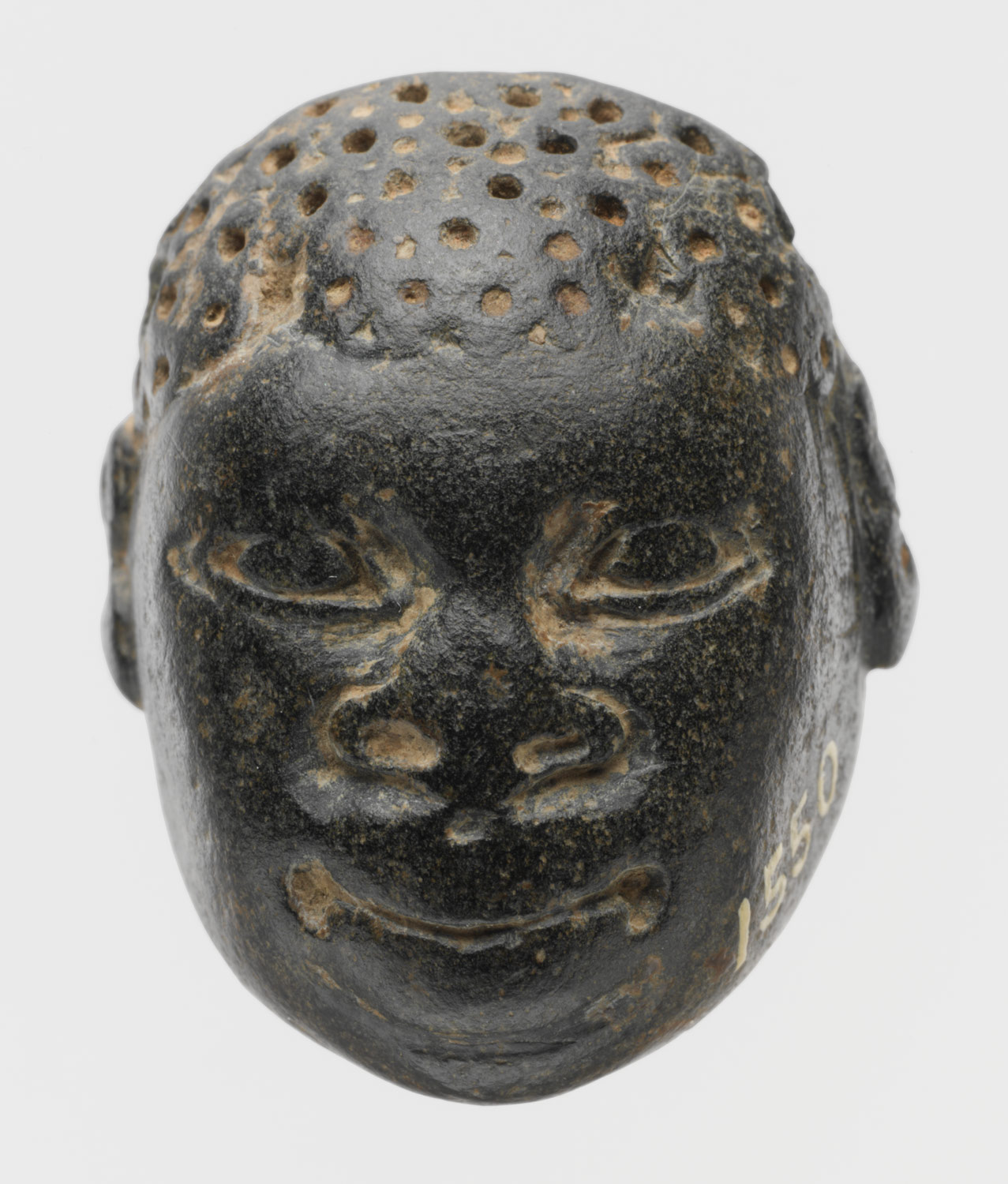
Chlorite pendant in the form of the head of an African (known as Ethiopian)
Dublin Core
Title
Chlorite pendant in the form of the head of an African (known as Ethiopian)
Subject
Africans in Ancient Greek Art
Description
I chose these two images because they reflect on how the Africans were simplified and objectified.
The first sculpture is from the Iron age, and shows how the Greek liked to generalize or oversimplify the “Ethiopians.” The face is exaggerated, with an exceedingly large nose/nostrils and wide, pursed lips. The hair doesn’t even look like hair, they just poked holes in the head and called it a day. Comparing the art to today’s times, I think that many people would say that this contributes to the animalization or historically racist caricatures of black people today. Not only that, but this is a pendant, people willingly wore this around their neck like it was jewelry. I think that also says something about the objectification of black people at the time.
While Africans were mainly used for entertainment purposes, my second image (from the Hellenistic period) shows that they had also been enslaved by the Greek. The little boy is naked, and the terracotta vase is meant for people to pour their water into. This is a bit contradictory considering that slaves were deprived of many resources, yet the artist wanted people to give him water. Comparing both art pieces, I find it interesting that when depicting Africans, the Greek often turned the art into an object (whether with utility or not). When looking at the Greek depicting themselves, they are often these huge, marble structures or statues with intricate detail, and rarely imposed as an object. They also happened to be clothed, but when they aren’t its regarded as symbolism for purity and is almost luxurious.
Further Questions: I am wondering why the Metropolitan only revealed one image that suggested slavery was prevalent in Greece. Keeping in mind that many affluent people collected Greek art, I wonder if they were as enthusiastic to purchase Greek depictions of Africans art. I also wonder if we have perspectives on any of the people who were enslaved or the artist’s that sculpted them. I think that it would make an exceptional conversation to speak about slavery in regards to divinity, and the justifications people had.
The first sculpture is from the Iron age, and shows how the Greek liked to generalize or oversimplify the “Ethiopians.” The face is exaggerated, with an exceedingly large nose/nostrils and wide, pursed lips. The hair doesn’t even look like hair, they just poked holes in the head and called it a day. Comparing the art to today’s times, I think that many people would say that this contributes to the animalization or historically racist caricatures of black people today. Not only that, but this is a pendant, people willingly wore this around their neck like it was jewelry. I think that also says something about the objectification of black people at the time.
While Africans were mainly used for entertainment purposes, my second image (from the Hellenistic period) shows that they had also been enslaved by the Greek. The little boy is naked, and the terracotta vase is meant for people to pour their water into. This is a bit contradictory considering that slaves were deprived of many resources, yet the artist wanted people to give him water. Comparing both art pieces, I find it interesting that when depicting Africans, the Greek often turned the art into an object (whether with utility or not). When looking at the Greek depicting themselves, they are often these huge, marble structures or statues with intricate detail, and rarely imposed as an object. They also happened to be clothed, but when they aren’t its regarded as symbolism for purity and is almost luxurious.
Further Questions: I am wondering why the Metropolitan only revealed one image that suggested slavery was prevalent in Greece. Keeping in mind that many affluent people collected Greek art, I wonder if they were as enthusiastic to purchase Greek depictions of Africans art. I also wonder if we have perspectives on any of the people who were enslaved or the artist’s that sculpted them. I think that it would make an exceptional conversation to speak about slavery in regards to divinity, and the justifications people had.
Creator
"From Amathus"
Publisher
The Metropolitan Museum of Art
Date
9th-8th Century B.C.
Contributor
Saja Osman
Rights
Public Domain. The Metropolitan Museum of Art. Used here for educational purposes only.
Format
Image
Language
En
Collection
Citation
"From Amathus", “Chlorite pendant in the form of the head of an African (known as Ethiopian),” World History 1 Online, Spring 2019, accessed October 17, 2026, https://jacknorton.org/1101-online-sp19/items/show/74.