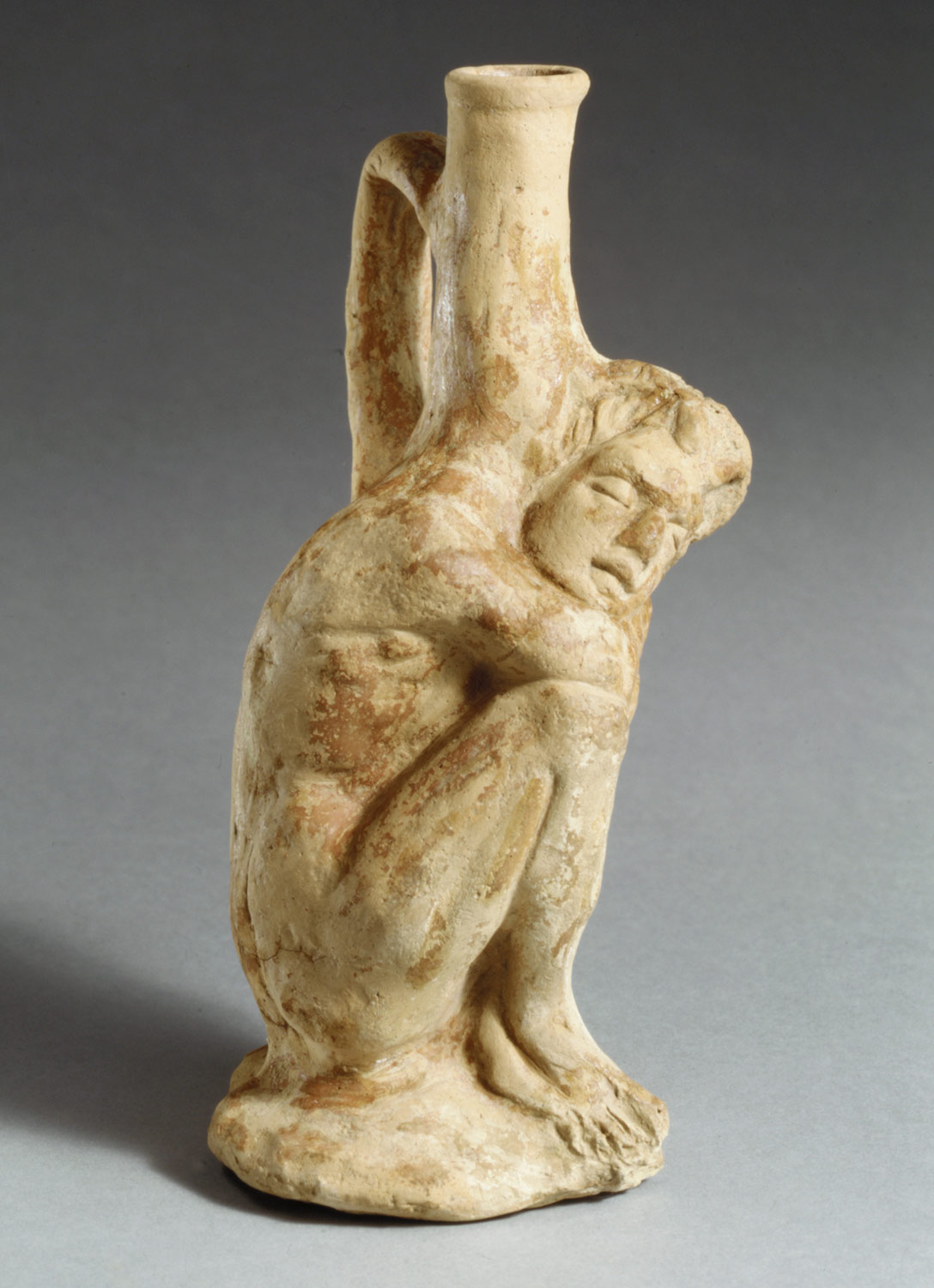
Terracotta vase in the form of a sleeping African (known as Ethiopian) boy
Dublin Core
Title
Terracotta vase in the form of a sleeping African (known as Ethiopian) boy
Subject
Hellenistic terracotta vase
Description
"Medium: Terracotta
Dimensions: H. 8 3/16 in. (20.8 cm)
Classification: Vases"
These sculptures of Ethiopians tell us a lot about how they were viewed in Greek culture during the 3rd-2nd century B.C. The Terracotta vase in the form of a sleeping African (known as Ethiopian) boy, is a sculpture of a young boy that is naked and weary. He seems poor as he has no clothing or shoes to wear. He is sleeping and looks extremely exhausted, indicating a long day of work, possibly as a slave. The title of the sculpture indicates that the subject is a young Ethiopian boy. This comments on the dehumanizing way Greek’s saw Ethiopians. They seemed to be categorized as servants and workers comparable to a brute. The other sculpture I choose is called Bronze statuette of an African (known as Ethiopian) youth. The subject’s clothing covers almost nothing and his prominent muscles suggest years of manual labor. His eyes seem to be hollowed out, which is another detail that makes him look like more of an animal or monster rather than a human. These pieces comment on the racial prejudice Greeks had against Africans at this time even though they had little contact with them. I wish to review how to effectively analyze artwork.
Dimensions: H. 8 3/16 in. (20.8 cm)
Classification: Vases"
These sculptures of Ethiopians tell us a lot about how they were viewed in Greek culture during the 3rd-2nd century B.C. The Terracotta vase in the form of a sleeping African (known as Ethiopian) boy, is a sculpture of a young boy that is naked and weary. He seems poor as he has no clothing or shoes to wear. He is sleeping and looks extremely exhausted, indicating a long day of work, possibly as a slave. The title of the sculpture indicates that the subject is a young Ethiopian boy. This comments on the dehumanizing way Greek’s saw Ethiopians. They seemed to be categorized as servants and workers comparable to a brute. The other sculpture I choose is called Bronze statuette of an African (known as Ethiopian) youth. The subject’s clothing covers almost nothing and his prominent muscles suggest years of manual labor. His eyes seem to be hollowed out, which is another detail that makes him look like more of an animal or monster rather than a human. These pieces comment on the racial prejudice Greeks had against Africans at this time even though they had little contact with them. I wish to review how to effectively analyze artwork.
Creator
Greek
Date
ca. 3rd–2nd century B.C.
Contributor
Anna Lucas
Rights
Copyright, The Metropolitan Museum of Art.
Used here for educational purposes only.
Used here for educational purposes only.
Collection
Citation
Greek, “Terracotta vase in the form of a sleeping African (known as Ethiopian) boy,” World History 1 Online, Spring 2019, accessed October 17, 2026, https://jacknorton.org/1101-online-sp19/items/show/71.